 The Daily
 Home›All Topics›Sleep Nutrition
Foods that help you sleep: what the research actually shows
Every "foods for sleep" list names the same handful of things. Some of them have real trial evidence behind them. Some have one small pilot study stretched into a headline. Here's the honest version of both, plus what the same research says to avoid.
The short version
- Magnesium has the best trial evidence — a placebo-controlled study in elderly insomnia patients found real improvements in sleep time and efficiency.
- Tart cherry juice's effect is real but modest — the main trial found it helped with night waking, not with falling asleep faster or sleeping longer overall.
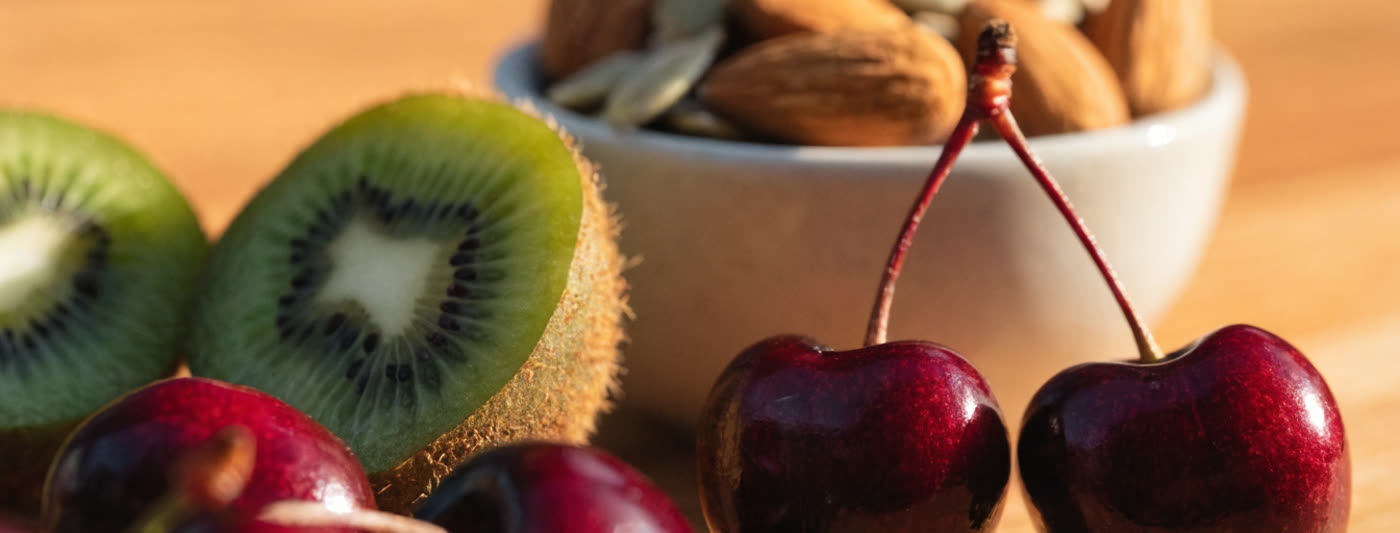
- Kiwifruit has the strongest whole-food evidence of anything on this list, with measurable improvements across sleep onset, duration and efficiency.
- What you avoid matters as much as what you eat — late caffeine, alcohol, and meals within 3 hours of bed all show up as real disruptors in the research.
Magnesium: the best-studied mineral for sleep
Of every nutrient marketed for sleep, magnesium has the most direct trial evidence. A double-blind, placebo-controlled trial in 46 elderly adults with diagnosed insomnia found magnesium supplementation produced statistically significant increases in sleep time and sleep efficiency, along with higher serum melatonin1. Worth being honest about the limitations: it's one trial, in an older population, and a later systematic review of the broader magnesium-insomnia literature found the overall evidence "promising" but still limited by small sample sizes and short trial durations2 — a real effect, not yet a settled one. Magnesium-rich whole foods include spinach, pumpkin seeds, almonds and black beans.
Tart cherries and kiwifruit: one modest, one genuinely strong
These two get lumped together in "foods for sleep" content, but the evidence behind them isn't equal. The frequently-cited tart cherry juice pilot study, in older adults with insomnia, found a real reduction in minutes spent awake after falling asleep — but no significant improvement in how fast people fell asleep, total sleep time, or overall sleep efficiency compared to placebo3. That's a genuine, specific benefit, not the sweeping insomnia-fix framing it often gets stretched into.
Kiwifruit's trial evidence is stronger. In a randomized study, adults with self-reported sleep problems who ate two kiwifruit an hour before bed for four weeks saw measurable improvements across sleep onset time, total sleep time, and sleep efficiency compared to their own baseline4. Kiwifruit is rich in serotonin precursors and antioxidants, which is the proposed mechanism — though as with most single-food sleep research, replication in larger trials is still limited.
Zinc
A randomized clinical trial gave 150 older adults either 30mg of zinc daily for 70 days or no supplement, and found sleep quality (measured on the Pittsburgh Sleep Quality Index) improved significantly in the zinc group alongside a real rise in serum zinc levels5. Food sources include oysters, red meat, pumpkin seeds and chickpeas. As with magnesium, this is a single trial rather than a body of consistent replication — worth trying through food first rather than assuming a supplement is required.
Vitamin D: a real correlation, not proof of a fix
A meta-analysis of nine studies covering over 9,000 people found vitamin D deficiency was associated with a significantly higher rate of sleep disorders, poor sleep quality, and short sleep duration6. That's a genuinely useful signal — but every study in that meta-analysis was observational, meaning it shows an association, not that correcting a deficiency actually fixes sleep. If you're someone who's rarely outside and suspects you're low, it's worth a blood test rather than assuming supplementation will solve poor sleep on its own.
What the same research says to avoid
Nutrition for sleep isn't only about what to add. A controlled trial found 400mg of caffeine (roughly 2-3 cups of coffee) taken 6 hours before bed still cut objectively measured total sleep time by more than an hour7 — treat early-to-mid afternoon as the real cutoff, not just after dinner. Alcohol is a similar trap: a 2024 meta-analysis of 27 studies found it suppresses REM sleep in a dose-dependent way starting at low doses, even though it can make falling asleep feel easier8. And timing matters beyond caffeine and alcohol — a case-control study found a dinner-to-bed time under 3 hours was associated with more than seven times the odds of gastroesophageal reflux disease compared to 4+ hours, and reflux is a common, under-recognized cause of fragmented sleep9.
A practical evening list
- A small handful of pumpkin seeds or almonds — magnesium and zinc together
- Two kiwifruit, about an hour before bed — the best whole-food trial evidence of anything here
- Tart cherry juice — a reasonable add, with modest and specific (not sweeping) expected benefits
- Dinner finished at least 3 hours before lying down — the reflux-and-fragmentation research backs this specifically
- No caffeine after early-to-mid afternoon, and treat alcohol as a sleep disruptor, not a sleep aid
The bottom line
Magnesium and kiwifruit have the most convincing trial evidence on this list; tart cherry juice and zinc have real but smaller, more specific effects; vitamin D's link to sleep is genuine but still observational. None of it replaces addressing light exposure, caffeine timing or chronic stress — but as one lever among several, what you eat and when you eat it has more real research behind it than most "foods for sleep" roundups let on.
Sources
- Abbasi B, et al. "The effect of magnesium supplementation on primary insomnia in elderly: A double-blind placebo-controlled clinical trial." J Res Med Sci, 2012.RCT, 46 elderly adults with diagnosed insomnia.
- Mah J, Pitre T. "Oral magnesium supplementation for insomnia in older adults: a systematic review & meta-analysis." BMC Complement Med Ther, 2021.Broader review. Promising but limited by small, short trials.
- Pigeon WR, et al. "Effects of a tart cherry juice beverage on the sleep of older adults with insomnia: a pilot study." J Med Food, 2010.Small crossover pilot. Improved WASO only, not sleep onset, total time, or efficiency.
- Lin HH, Tsai PS, Fang SC, Liu JF. "Effect of kiwifruit consumption on sleep quality in adults with sleep problems." Asia Pac J Clin Nutr, 2011.4-week trial, adults with self-reported sleep disturbance.
- Afzali A, et al. "Effect of Zinc Supplement on Sleep Quality in Older Adults: A Randomized Clinical Trial Study." Acta Fac Med Naissensis, 2022.150 older adults, 30mg zinc daily for 70 days.
- Gao Q, et al. "The Association between Vitamin D Deficiency and Sleep Disorders: A Systematic Review and Meta-Analysis." Nutrients, 2018.9 studies, 9,397 people. Observational — association, not a supplementation trial.
- Drake C, et al. "Caffeine Effects on Sleep Taken 0, 3, or 6 Hours before Going to Bed." J Clin Sleep Med, 2013.Controlled trial, 400mg caffeine dosed at three different times before bed.
- Gardiner C, et al. "The effect of alcohol on subsequent sleep in healthy adults: A systematic review and meta-analysis." Sleep Med Rev, 2024.27 studies. Dose-dependent REM suppression starting at low doses.
- Fujiwara Y, et al. "Association Between Dinner-to-Bed Time and Gastro-Esophageal Reflux Disease." Am J Gastroenterol, 2005.Case-control study. Dinner-to-bed time under 3 hours linked to 7.45x odds of GERD.
This article is general information, not medical advice, and does not replace a consultation with a qualified healthcare professional. Dietary supplements are not intended to diagnose, treat, cure or prevent any disease.